Hey there, fellow digital marketing enthusiasts! Buckle up, because we’re about to embark on a journey of self-discovery that might just revolutionise your professional life. Today, we’re diving deep into the world of the Gallup CliftonStrengths test – a tool that, I’ll admit, I was initially skeptical about. But boy, was I in for a surprise!
The Gallup test is definitely a tool I took too long to get to. It seemed to me that the price didn’t match the quality and value it received in return, and on top of that it was an artificial tool in the hands of pseudo-coaches. How wrong I was, and how much of an impact it had on my life, I was to find out soon enough. I invite you to a candid and uncolored article about what the Gallup CliftonStrengths test is and the impact it can have on your professional life. The article is not sponsored or affiliated with the company responsible for distributing this test, so expect subjective comments and my personal thoughts.
As a digital marketing expert who’s always on the lookout for ways to optimise performance and maximise potential, I can’t believe I slept on this gem for so long. I used to think it was just another overpriced assessment in the hands of self-proclaimed life coaches. Spoiler alert: I couldn’t have been more wrong. So, grab your favourite caffeinated beverage, and let’s explore the Gallup CliftonStrengths test – what it is, how it works, and why it might be the game-changer you’ve been waiting for in your professional journey. Buckle up, because this is going to be one heck of a ride!
What is the Gallup CliftonStrengths test?
Alright, let’s start with the basics. The Gallup CliftonStrengths test, formerly known as the Clifton StrengthsFinder, is a personal assessment tool developed by the Gallup Organization. It’s based on the positive psychology work of Donald O. Clifton, who believed that focusing on what people do best is far more effective than trying to fix their weaknesses. Now, I know what you’re thinking – “Another personality test? Yawn.” But hold your horses, because this isn’t your run-of-the-mill BuzzFeed quiz telling you which Disney princess you are based on your breakfast preferences.
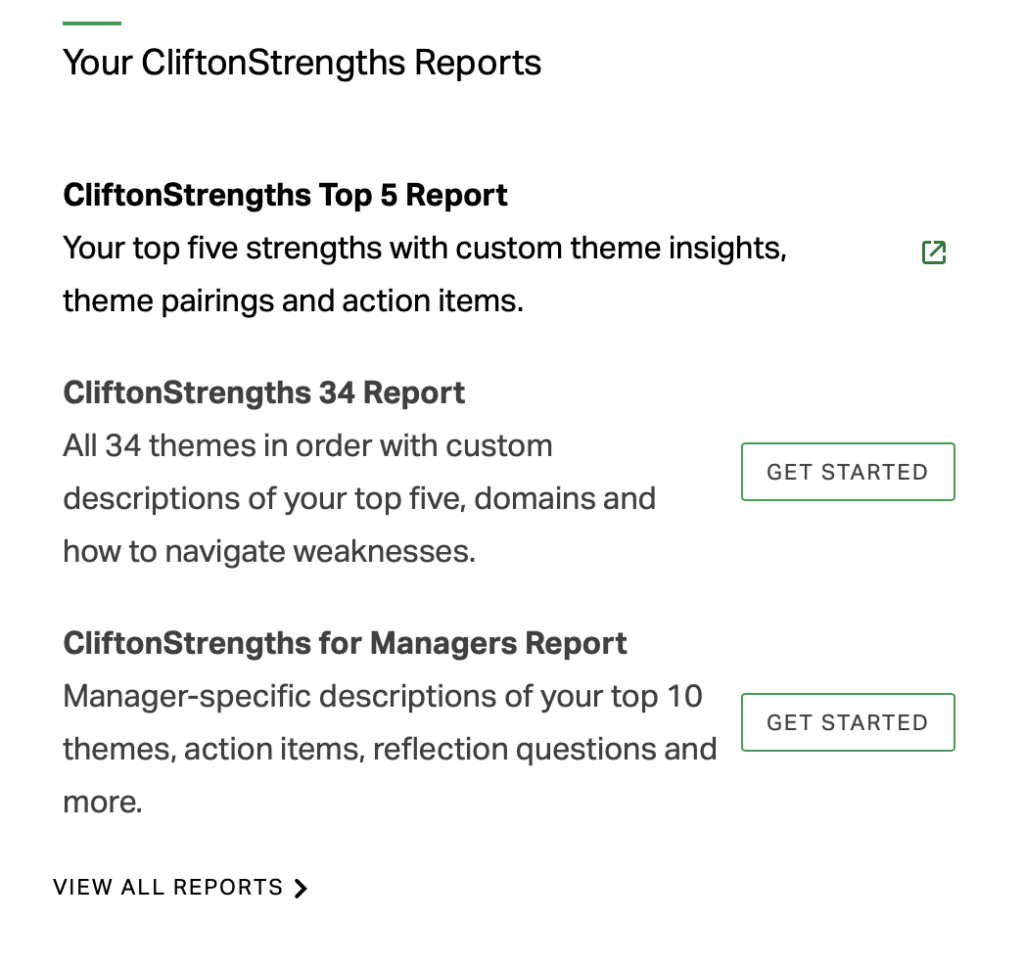
The Gallup CliftonStrengths assessment is a scientifically validated tool that helps individuals identify their natural talents and strengths. It consists of 177 paired statements, and you have 20 seconds to choose which one describes you better. Sounds simple, right? But trust me, it’s deceptively powerful.The test measures 34 different talent themes, which are then ranked based on your responses. The top five themes are considered your “Signature Themes” or dominant strengths.
These are the areas where you have the greatest potential for growth and excellence. But here’s where it gets really interesting – the CliftonStrengths doesn’t just give you a list of your top strengths and send you on your merry way. It provides detailed insights into how these strengths manifest in your life, how you can leverage them in your career, and even how they might interact with the strengths of others
My Gallup CliftonStrengths: a personal revelation
Now, let’s get personal for a moment. When I finally bit the bullet and took the CliftonStrengths assessment, I was skeptical but curious. The results? Well, they were nothing short of eye-opening.My top five strengths came out as:
- Strategic
- Ideation
- Learner
- Activator
- Communication
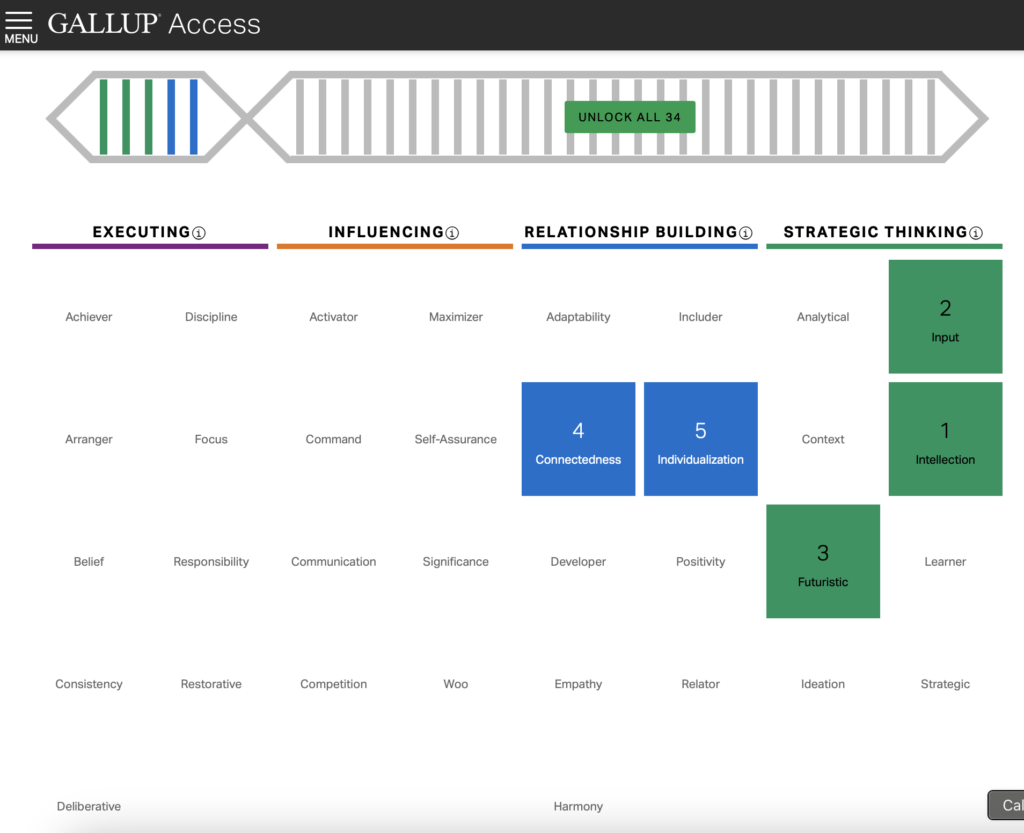
At first glance, I thought, “Well, duh. I’m a digital marketing expert. Of course, I’m strategic and full of ideas.” But as I delved deeper into the descriptions and implications of each strength, I started to see patterns in my behavior and tendencies that I had never noticed before.
For instance, my “Strategic” strength explained why I always seem to find the most efficient path forward in complex projects. “Ideation” shed light on why I’m constantly coming up with new campaign concepts (sometimes to the point of overwhelming my team – sorry, guys!).
The “Learner” strength validated my insatiable appetite for staying up-to-date with the latest digital marketing trends.
“Activator” explained my tendency to jump into action and get things moving, sometimes before all the details are ironed out (a trait that has both served me well and gotten me into trouble).
And “Communication“? Well, that one was a no-brainer. After all, I’m writing this blog post, aren’t I? But here’s the kicker – understanding these strengths didn’t just make me feel good about myself. It gave me a roadmap for how to leverage these talents more effectively in my work.
It helped me understand why certain tasks energised me while others drained me. And perhaps most importantly, it gave me a new language to articulate my value to clients and colleagues.
The Four Domains of Gallup CliftonStrengths
Now that we’ve taken a peek at my personal results, let’s zoom out a bit and look at the bigger picture. The 34 CliftonStrengths themes are grouped into four domains of leadership strength. Understanding these domains can help you see how your strengths fit into the broader context of team dynamics and leadership styles.
1. Executing
Themes in this domain help you make things happen. If you’re strong in Executing themes, you’re probably the person who turns ideas into action and gets stuff done. You’re the engine that drives the team forward. Executing themes include:
- Achiever
- Arranger
- Belief
- Consistency
- Deliberative
- Discipline
- Focus
- Responsibility
- Restorative
2. Influencing
These themes help you take charge, speak up, and make sure the team is heard. If you’re strong in Influencing themes, you’re likely great at persuading others and getting people on board with your ideas. Influencing themes include:
- Activator
- Command
- Communication
- Competition
- Maximizer
- Self-Assurance
- Significance
- Woo
3. Relationship building
Themes in this domain help you build strong relationships that can hold a team together. If you’re strong in relationship building themes, you’re probably the glue that keeps the team cohesive and collaborative. Relationship building themes include:
- Adaptability
- Connectedness
- Developer
- Empathy
- Harmony
- Includer
- Individualization
- Positivity
- Relator
4. Strategic thinking
These themes help you absorb and analyze information that can inform better decisions. If you’re strong in strategic thinking themes, you’re likely the one who keeps the team focused on what could be. Strategic thinking themes include:
- Analytical
- Context
- Futuristic
- Ideation
- Input
- Intellection
- Learner
- Strategic
Looking at my top five strengths, I realised that I have a mix of Influencing (Activator, Communication) and strategic thinking (Strategic, Ideation, Learner) themes. This explained why I often find myself not just coming up with ideas, but also driving their implementation and convincing others to get on board.
Understanding these domains can be incredibly helpful in team dynamics. For instance, if you’re putting together a project team, you might want to ensure you have a good mix of strengths across all four domains. Or, if you’re looking to improve in a certain area, you might seek out colleagues who are strong in that domain to learn from them.
Top 5 strengths vs. 34 CliftonStrengths themes
When you take the CliftonStrengths assessment, you have two options: you can either get a report of your top 5 strengths, or you can go all out and get the full 34-theme sequence. Now, you might be wondering, “Is it worth shelling out the extra cash for all 34?”As someone who initially went for the top 5 and later upgraded to the full 34, let me share my two cents.
The case for top 5
The top 5 report is a great starting point. It gives you a solid understanding of your most dominant themes – the areas where you have the greatest potential for excellence. For many people, this is enough to gain valuable insights and start leveraging their strengths more effectively.The top 5 report is also more digestible. It’s easier to focus on and remember five themes than 34. Plus, it’s more affordable, making it a good option if you’re on a budget or just dipping your toes into the world of strengths-based development.
The Case for All 34
Personally, I found the upgrade to 34 to be worth it. It gave me a more nuanced understanding of my strengths profile and how I operate. However, if you’re just starting out, the top 5 is a great place to begin. You can always upgrade later if you find yourself hungry for more insights.
I know my strengths – what’s next?
Alright, so you’ve taken the test, you’ve got your results, and you’re looking at your strengths thinking, “Cool… now what?” Don’t worry, I’ve been there too. Here’s a roadmap for what to do next:
Deep dive into your strengths
First things first, don’t just skim the surface of your strength descriptions. Really dig in and reflect on how these strengths manifest in your life and work. Ask yourself:
- How have I seen this strength play out in my past successes?
- In what situations do I feel most energized and in my element?
- How might this strength sometimes be perceived negatively by others?
For example, with my “Ideation” strength, I realized that while it’s great for brainstorming sessions, it can sometimes lead me to overwhelm my team with too many ideas. Understanding this helped me learn to channel this strength more effectively.
Share your strengths
Don’t keep your strengths a secret! Share them with your colleagues, your boss, even your clients. This isn’t about bragging – it’s about helping others understand how you operate at your best.I started including my top 5 strengths in my email signature and on my LinkedIn profile. You’d be surprised how many interesting conversations this can spark!
Align your work with your strengths
Look for ways to align your daily tasks and long-term projects with your strengths. Can you volunteer for projects that play to your strengths? Can you delegate tasks that don’t?For instance, with my “Learner” strength, I made sure to carve out dedicated time each week for professional development and staying up-to-date with industry trends.
Develop complementary skills
While the CliftonStrengths philosophy focuses on developing strengths rather than fixing weaknesses, it can be helpful to develop skills that complement your strengths.For example, if you’re strong in “Ideation” like me, you might benefit from developing project management skills to help you turn those ideas into reality.
Build strength-based partnerships
Look for colleagues whose strengths complement yours. If you’re strong in strategic thinking but weak in execution, partner with someone who has strong executing themes.I’ve found some of my most successful collaborations have been with team members whose strengths fill in my gaps.
Use your strengths in problem-solving
When faced with a challenge, consciously think about how you can apply your strengths to solve it. Your unique combination of strengths gives you a distinctive approach to problem-solving.For instance, I often use my “Strategic” strength to break down complex marketing challenges into manageable steps.
Continual reflection and adjustment
Regularly reflect on how you’re using your strengths and the impact it’s having. Are there areas where you could leverage your strengths more effectively? Are there situations where you might be overusing a strength?I find it helpful to do a quarterly “strengths check-in” with myself to ensure I’m continually growing and adapting my approach.
Explore strengths-based leadership
If you’re in a leadership role (or aspiring to be), explore how you can use your strengths to become a more effective leader. Each strength can be a powerful leadership tool when used appropriately.For example, my “Communication” strength has been invaluable in articulating vision and strategy to my team.
9. Consider strengths coaching
If you really want to dive deep, consider working with a Gallup-certified strengths coach. They can provide personalized insights and strategies for leveraging your strengths more effectively.
Pay it forward
Once you’ve started seeing the benefits of a strengths-based approach, share your experience with others. Encourage your team or organization to explore strengths-based development.I’ve become a bit of a CliftonStrengths evangelist in my network, and it’s been rewarding to see others discover and leverage their strengths.Remember, understanding your strengths is just the beginning. The real magic happens when you actively apply this knowledge to your work and life.
Conclusion
As we wrap up this deep dive into the world of Gallup CliftonStrengths, I hope you’re feeling as excited about the possibilities as I am. When I first encountered this tool, I was skeptical. Now, I can confidently say it’s been one of the most impactful professional development experiences of my career.The CliftonStrengths assessment isn’t just another personality test. It’s a powerful tool for self-awareness, personal development, and career growth. By focusing on what you naturally do best, you can:
- Boost your confidence and job satisfaction
- Improve your performance and productivity
- Enhance your relationships with colleagues and clients
- Make more informed career decisions
- Become a more effective leader
But here’s the thing – taking the test is just the first step. The real value comes from actively applying your strengths knowledge in your daily life and work. It’s about consciously leveraging your natural talents, seeking out opportunities that align with your strengths, and continually refining your approach.As a digital marketing expert, I’ve found that understanding my strengths has not only made me better at my job but has also helped me enjoy it more. I’m more intentional about the projects I take on, the way I approach challenges, and how I collaborate with others.
So, if you haven’t taken the CliftonStrengths assessment yet, I strongly encourage you to give it a shot. And if you have, I hope this article has inspired you to dust off your results and look at them with fresh eyes. Remember, in the world of digital marketing – and in any field, really – your greatest competitive advantage is being more of who you already are. Your unique combination of strengths is your superpower. Embrace it, develop it, and watch as it transforms your professional life.Here’s to discovering and leveraging your strengths. Trust me, your future self will thank you for it!